Critical Incidents Consulting
Systems advice from someone who has actually run them inside an agency.
Critical Incidents Consulting helps law enforcement agencies plan, procure, implement, and govern the technology they depend on every shift: CAD/RMS, analytics, body-worn camera, license plate readers, communications, and the compliance framework around all of it.
Practical help at the points where public safety projects usually stall.
Most agency technology problems are not really technology problems. They are procurement, governance, training, and change problems with a vendor attached. That is where this practice focuses.
CAD/RMS modernization
Requirements, vendor selection, configuration oversight, data migration, interface planning, and go-live readiness for records and dispatch platforms. Including the legacy system you still have to keep alive until cutover.
Compliance & accreditation readiness
CJIS security policy, FDLE technical audits, NIBRS/FIBRS data quality, and Florida accreditation (CFA) preparation. Policies and SOPs written so they survive an auditor, not just a shelf.
Program & project management
Independent project leadership for multi-vendor implementations: schedule, risk, stakeholder communication, city IT and county coordination, and holding vendors to what they sold.
Procurement, contracts & vendors
Scope development, contract and subscription review, cost-responsibility analysis, permitting and right-of-way coordination for field deployments, and vendor performance management after signature.
Training & change management
Train-the-trainer programs, role-based curriculum, dispatcher and report-writing training, attendance accountability, and the communications plan that gets 100+ users through a cutover without a revolt.
Field technology & continuity
Body-worn camera programs, LPR networks, radio and recording infrastructure, command post and EOC connectivity, and the redundancy planning that keeps communications up when the primary path fails.
Built for the agencies that don't have a technology department of their own.
Mid-size municipal and county police departments, roughly 50 to 300 sworn, that are facing a CAD/RMS replacement, a CJIS or FDLE audit, an accreditation cycle, or a vendor relationship that has gone sideways. The people who call are usually chiefs, deputy chiefs, city managers, and city IT directors who need someone who speaks both languages and has no product to sell. It is also for city leadership that wants an independent read before signing a five-year subscription.
Three ways to engage. All priced by proposal.
Readiness audit
A fixed-scope review of where you stand before a modernization, audit, or accreditation cycle: systems, data quality, policies, contracts, and staffing. You get a written findings report and a prioritized plan you can hand to council or the city manager.
Program lead
Embedded project or program management for a CAD/RMS, analytics, BWC, or LPR implementation. I run the schedule, the vendor, the interfaces, the training plan, and the cutover so your command staff can keep running the department.
Advisory retainer
A standing monthly arrangement for chiefs, city managers, and IT directors who want a second set of eyes during a multi-year program: contracts, vendor escalations, compliance questions, and policy drafts as they come up, without waiting for a crisis to justify a project.
Operational credibility and technical depth in the same chair.
Most consultants in this space come from one side or the other. Vendor-side people understand the product but not the roll call. Former command staff understand the agency but hand the technical work to someone else. This practice was built on a career that did both.
I started as a network administrator with a computer information sciences degree, then entered sworn service and worked every rank from patrol officer to division commander: investigations, traffic and crash reconstruction, patrol command, internal affairs, and technology leadership. Today I command a support services division for a South Florida agency of roughly 180 personnel, with responsibility for communications, training, records quality, evidence, body-worn camera, corrections, fleet, and every major public safety system the department runs.
That means when I advise on a CAD migration, I have sat in the dispatch chair during the outage, written the SOP the auditor asked for, and signed the training roster.
- Police Captain, Support Services DivisionDivision command, public safety technology, communications, training, compliance
- Internal Affairs CommanderProfessional standards, IA case management system implementation
- Lieutenant, Technology DivisionCAD/RMS, integrations, vendor management, IT coordination
- Lieutenant, Uniform Patrol & Traffic / AIUShift command, crash investigation unit, traffic homicide investigator
- Sergeant & DetectiveFront-line supervision; investigations including crimes against children and the elderly
- Police OfficerSworn service begins
- Network AdministratorSystems and infrastructure, before law enforcement
Selected programs led or directed
- Agency-wide CAD/RMS replacement as lead project manager: discovery through go-live, a dozen system interfaces, legacy data migration, SSO, GIS validation, and department-wide training for 100+ users.
- Public safety analytics platform rollout from kickoff to full-department onboarding, including infrastructure readiness and data access governance.
- Internal affairs case management implementation replacing legacy IA functions, with supervisor workflows, use-of-force definitions, and training.
- License plate reader network expansion covering camera siting, right-of-way permitting, county and city jurisdiction, contract and fee review, and field troubleshooting.
- FDLE technical audit and CFA accreditation cycle preparation and response, including encryption and backup documentation and legacy-system access controls.
- State crime reporting (FIBRS) compliance program with weekly rejected-report monitoring and quality control, earning state recognition.
- Command post and EOC connectivity for large-scale events, including satellite backhaul, power redundancy, and continuity planning.
- Body-worn camera program oversight covering integration with CAD/RMS, retention rules, evidence handling, and training.
Replacing a records and dispatch platform for a 180-person agency without stopping the department.
The situation
A South Florida municipal agency was running an end-of-life records and CAD platform with recurring interface failures, rejected state crime reports, and a state technical audit on the calendar. Leadership approved a multi-year replacement program worth more than $1.6 million, with a hard go-live date and no dedicated project office.
What was done
As agency project manager: ran discovery and configuration with the vendor; coordinated roughly a dozen interfaces including county CAD-to-CAD, state arrest reporting, body-worn camera, recording, and LPR systems; resolved SSO, IP whitelisting, and GIS address validation issues; managed legacy data migration; and built a department-wide training program with train-the-trainer sessions and eight-hour role-based classes for 100+ users, with attendance accountability to command staff.
The result
State crime reporting recognition earned ahead of cutover, a state technical audit completed with legacy-system access controls and encryption and backup documentation in place, and a department-wide cutover tracking to its original date, with the legacy platform held in read-only mode through sunset rather than taken offline early.
Jorge E. Cruz
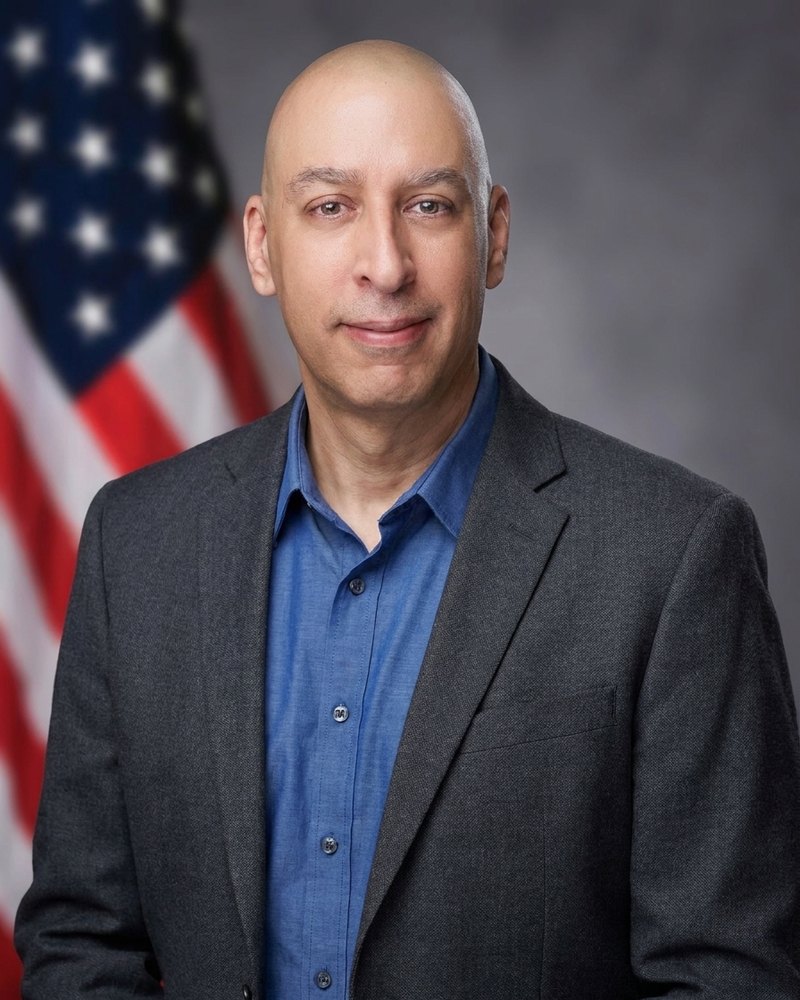
Jorge Cruz is a police captain, public safety technology leader, and the founder of Critical Incidents Consulting. He is based in South Florida and works with municipal and county law enforcement agencies, city leadership, and the vendors who serve them.
He holds a Master of Arts in Disaster Management from Florida International University and a Bachelor of Science in Computer Information Sciences from Barry University, and he is a certified law enforcement instructor and FAA Part 107 remote pilot.
His work sits at the intersection of three things agencies rarely get in one person: command-level operational judgment, hands-on technical fluency, and the patience to manage a five-year program without losing the plot.
Education
- M.A., Disaster Management · Florida International University, 2023
- B.S., Computer Information Sciences · Barry University, 2009
- A.S., Computer Information Technology, Cisco Networking · 2005
Credentials
- Law Enforcement Instructor · FDLE / CJSTC
- FAA Part 107 Remote Pilot
- Traffic Homicide Investigator
- CJIS Security certified
- Hostage Negotiator; Interview & Interrogation
Platforms & domains
Have a project, an audit, or a vendor problem?
Send a short note about what you are dealing with. Initial conversations are free, direct, and confidential. If it is not a fit, I will say so and point you somewhere useful.